The call for proposals, now in its final evaluation stage, was open to community-based organizations (CBOs), trade associations, cooperatives, agricultural communities, Indigenous communities or associations, and non-governmental organizations. It funds activities related to the creation, expansion or formal recognition of private protected areas, in line with the new National System of Protected Areas (SNAP) established under Law 21.600, as well as their long-term sustainable management.
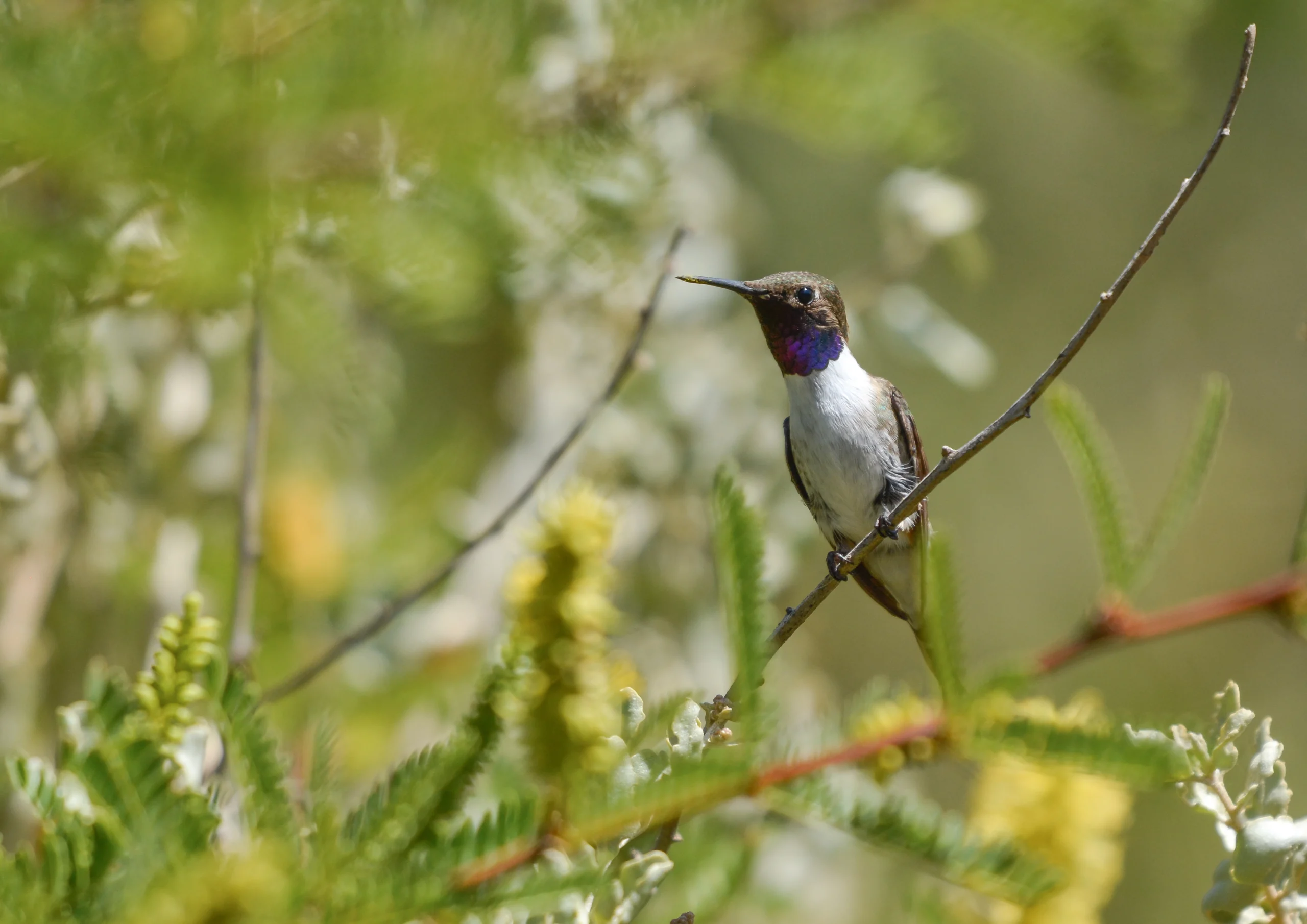
Picaflor de Arica - Pablo Gutiérrez
Celebrating the arrival and rollout of this hemispheric initiative in Chile, the organizations leading Conserva Aves in the country announced in June 2026 the official launch of Chile’s first call for proposals to fund the creation, expansion and formal recognition of private protected areas, with the aim of conserving key habitats for threatened migratory and native birds in Latin America.
Eugenio Rengifo, Executive Director of Fondo Naturaleza Chile, the initiative’s environmental fund partner in Chile, said: “This call for proposals is a historic opportunity to channel resources directly to local communities, enabling effective, long-term conservation of the ecosystems most critical to bird life.”
In Chile, the initiative will award grants of up to USD 107,000 for the creation of new reserves, USD 60,000 for expansions and USD 50,000 for formal recognition processes. Technical support will be a cornerstone for ensuring the viability of the selected areas. Diego Urrejola, Executive Director of Fundación Cosmos, highlighted the strategic value of this support: “We will provide training and hands-on guidance to co-design management and financial sustainability plans for the territories involved, ensuring that these protected areas conserve priority ecosystems while also becoming an opportunity for local development.”
The arrival of Conserva Aves in Chile marks a key milestone for biodiversity protection at a continental scale, connecting local efforts with the migratory flyways that span the hemisphere from Alaska to Tierra del Fuego. Javiera Ferreyra, Director of the National Audubon Society in Chile, underscored the importance of this hemispheric effort: “Birds know no borders. As an organization with more than 120 years of conservation experience, Audubon has contributed its cutting-edge science and technical expertise to this initiative to identify and prioritize the most important sites for bird conservation along the migratory flyways of the Americas. This prioritization is especially relevant in places where migratory birds overlap with threatened, endemic resident species, because protecting these sites contributes not only to local conservation but also to meeting continental bird conservation goals across the hemisphere.” Audubon carried out the analysis in close collaboration with Chile’s Network of Bird and Wildlife Observers (Red de Observadores de Aves y Vida Silvestre de Chile, ROC), combining hemispheric-scale scientific data with local knowledge.
The call for proposals is geared toward inclusive conservation, promoting gender-responsive approaches, the participation of local communities and the integration of traditional ecological knowledge. “As national partners, we will contribute technical advice and a capacity-building process for local partners to support the conservation of birds and their habitats. We are convinced that putting tools and knowledge in the hands of communities is key to promoting effective, lasting conservation grounded in active participation and in valuing the territories,” said Ivo Tejeda, Executive Director of Chile’s Network of Bird and Wildlife Observers (ROC).
The initiative is a collaborative partnership between:
The Fondo Naturaleza Chile team coordinating Conserva Aves is made up of Héloïse Doligé, Coordinator, and Jorge Arana, Financial Analyst.
Learn more at: https://www.fondonaturaleza.org/conservaavesenchile