Sebastián Herzog, Director of the Latin America and Caribbean Protected Areas Initiative at the National Audubon Society, delivered a keynote presentation on the Conserva Aves Initiative. In his remarks, he highlighted the initiative’s unique approach: the creation and strengthening of subnational protected areas, along with financing mechanisms that support long-term sustainability. Beyond the technical aspects, he emphasized the importance of conserving birds and habitats as drivers of ecological balance and economic opportunities for local communities.
He underscored two central phases of the project:
1. The BEZOS Project, focused on bird conservation in the Tropical Andes (Colombia, Ecuador, Peru, and Bolivia).
2.The expansion supported by Canada, which broadens the initiative’s impact across Central America and Mesoamerica while reinforcing ongoing efforts in Peru and Colombia.
However, he devoted special attention to Bolivia, where Conserva Aves could surpass one million hectares conserved—an achievement that, according to Herzog, “could represent 50% of the total reached by the initiative across seven countries.”


A Replicable Model for the Region
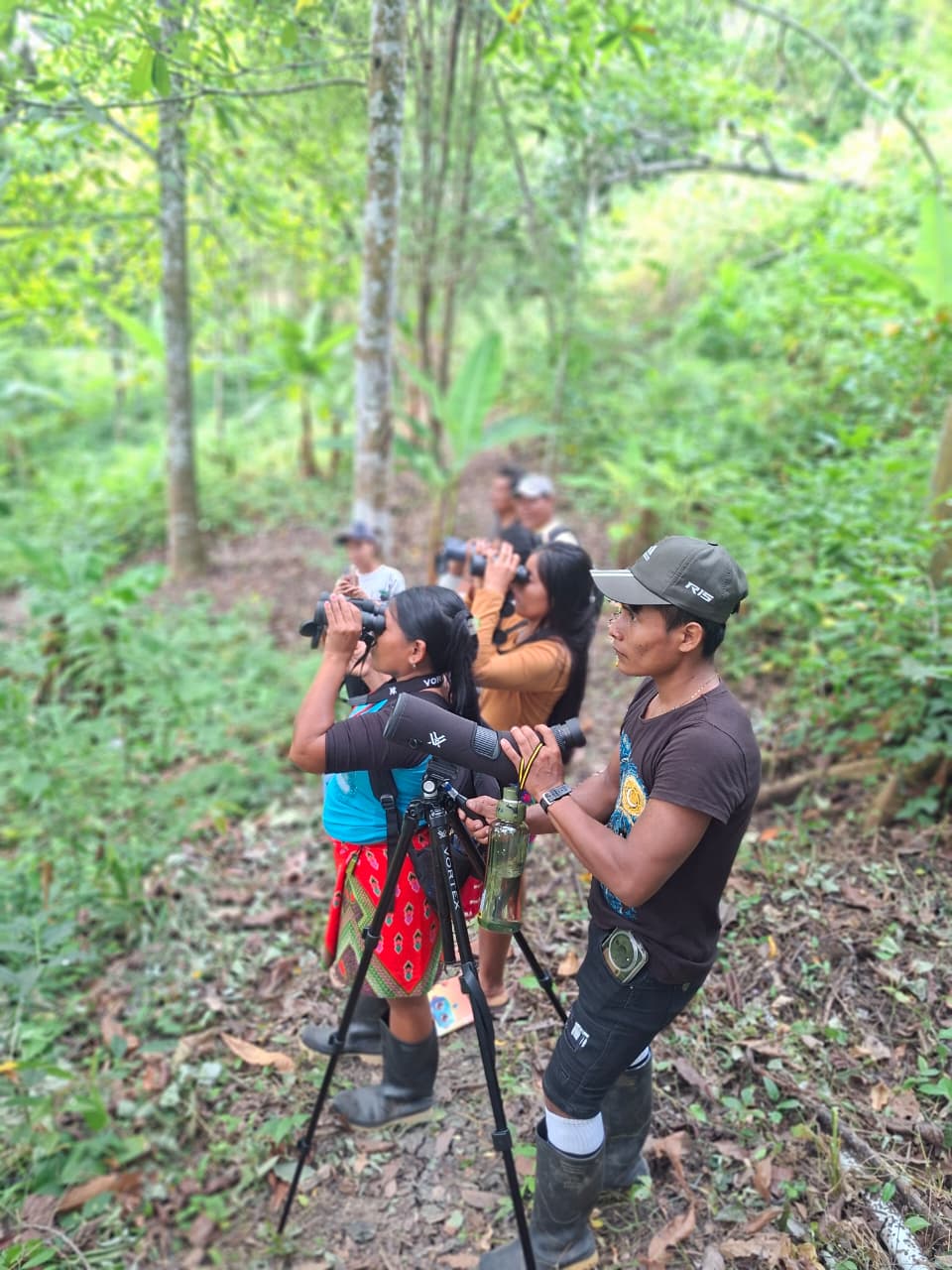
The presentation made it clear that Conserva Aves has an impact that goes beyond bird protection: it creates economic alternatives, promotes community leadership, and strengthens territorial governance. Experiences like Loma Santa position Bolivia as a regional reference in indigenous conservation.
“If we all saw the forest as our home, as they do in Loma Santa, conservation in Bolivia would take a historic leap,” said Herzog.
The conclusion of his speech was accompanied by a touching gesture: several people approached him holding copies of the Bird Guide of Bolivia to ask for his autograph. A moment that reflected the public’s respect, admiration, and closeness to his work.
About the Initiative
Conserva Aves is protection of life territories!
This new refuge emerges under the framework of the Conserva Aves Initiative, promoted by the American Bird Conservancy, National Audubon Society, BirdLife International, Birds Canada, and the Latin American and Caribbean Environmental Funds Network (RedLAC).
In Bolivia, the initiative is led by the Fundación para el Desarrollo del Sistema Nacional de Áreas Protegidas (FUNDESNAP) and Asociación Armonía, with valuable support from the Bezos Earth Fund.