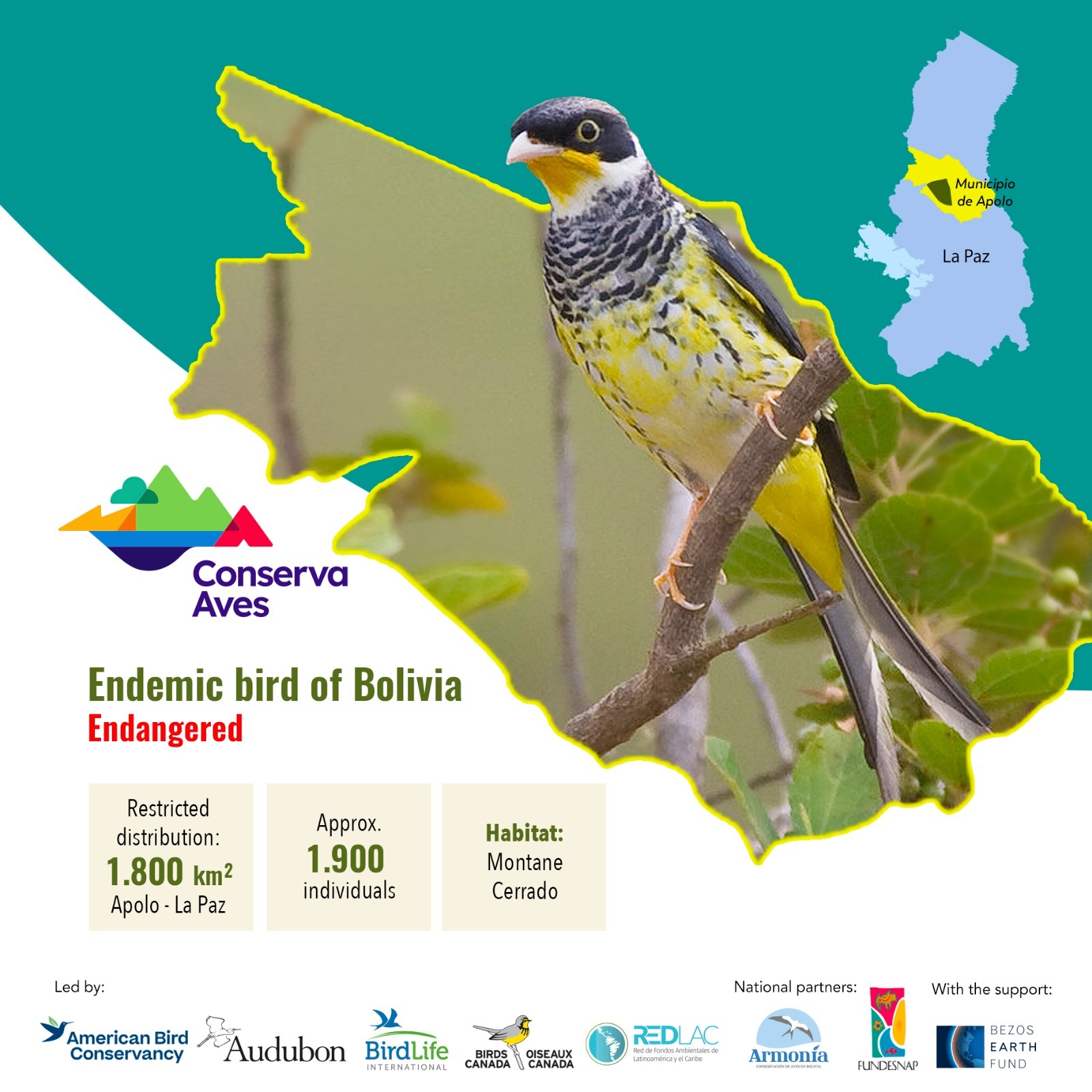
In Bolivia, Conserva Aves is making progress in Apolo (La Paz) through the creation of 1,888 hectares of Community Protected Areas, the establishment of nurseries, and the reforestation of over 24,000 native trees. These actions, led by Leco and Quechua indigenous communities, aim to protect the Palkachupa cotinga and advance the national goal of protecting 700,000 hectares.
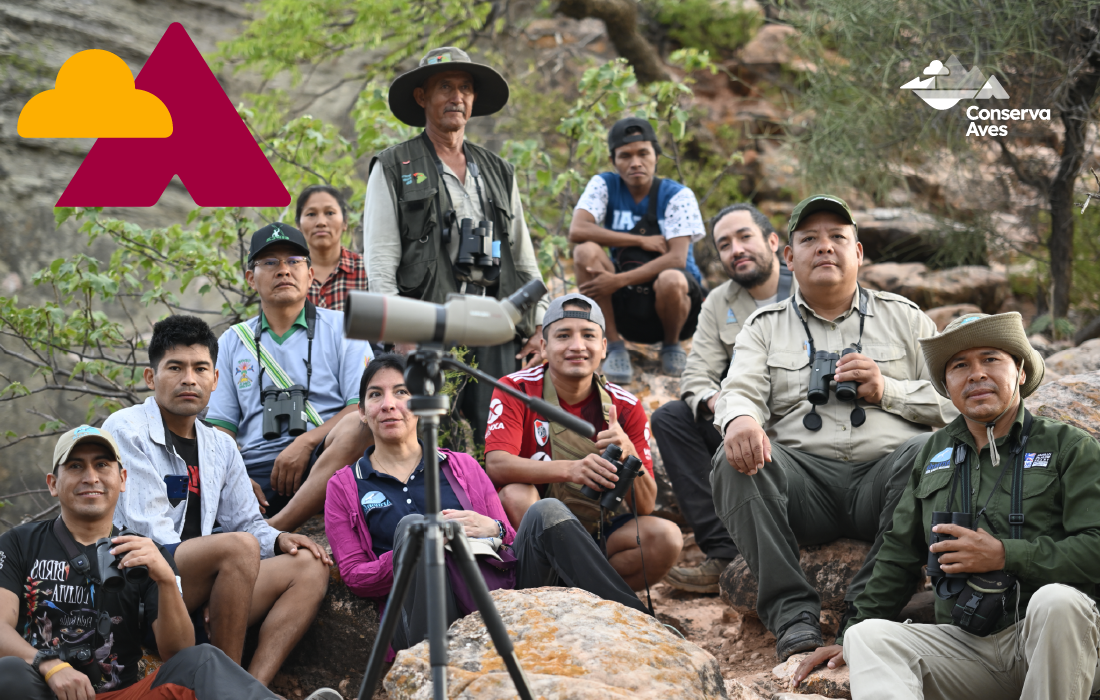
Margarita Palacios, Asociación Armonía
In Apolo, conservation has moved from being a promise to becoming a collective decision. The Central Indigenous Organization of the Leco People of Apolo (CIPLA), together with the Quechua communities of San José and Santa Cruz del Valle Ameno, declared 1,888 hectares as Community Protected Areas, safeguarding nearly a quarter of the habitat of the Palkachupa cotinga (Phibalura boliviana), an endemic and threatened bird species.
“It is already recognized as protected zones, conservation areas for the Palkachupa,” explains Dionisio Miguel Gutiérrez Cubo, Grand Captain of CIPLA. “It is a commitment of the entire territory. It is not only about observing it, but about making the most of this potential as part of our livelihoods.”
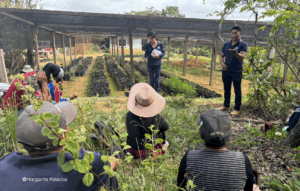
As part of this territorial effort, communities built three community nurseries and produced over 24,700 native seedlings, distributed among six communities to restore forests and recover ecosystems. Additionally, 165 hectares were fenced strategically to allow natural regeneration and protect forests from livestock intrusion.
“Protecting our territory means safeguarding water sources, improving bee habitats, and securing our livelihoods. We are restoring an entire ecosystem,” says Remmy Huanca, technician at Armonía and Leco authority from Pata Salinas.
Thanks to these actions, Conserva Aves protects not only the Palkachupa but also the Tangara Inti (Heliothraupis oneilli), a species recently assessed as Vulnerable. This work demonstrates that community-based conservation can produce concrete results, contributing to the goal of protecting 700,000 hectares in Bolivia under the hemispheric initiative.
“We are starting like a baby, but soon we will fly and show the world the wonder we have,” says Eduardo Cuajera, leader from Chirimayo, recalling how this small bird, once known locally as “awicha pesco,” has become a symbol of conservation and community pride.
Conserva Aves
Conserva Aves is the protection of territories of life! This new refuge emerges under the framework of the Conserva Aves Initiative, promoted by American Bird Conservancy, National Audubon Society, BirdLife International, Birds Canada, and the RedLAC Network of Environmental Funds. In Bolivia, the initiative is led by the Foundation for the Development of the National Protected Areas System (FUNDESNAP) and Asociación Armonía, with valuable support from the Bezos Earth Fund.