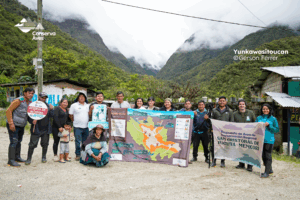
The community of Calabaza (Junín) is driving the creation of the San Cristóbal de Pucutá - Menkori Regional Conservation Area (ACR) to protect over 100 bird species, including endemics like the Junín tapaculo. With various support, they aim to establish a sustainable tourism model benefiting local residents. The project, currently in approval phase II, would conserve 60,000 hectares of cloud forests.
Through collaboration between Calabaza Village, Junín’s Regional Government, civil association Yunkawasi, and Satipo Provincial Municipality, birdwatching tourism is being developed as a sustainable economic alternative in Satipo’s cloud forest heartland.
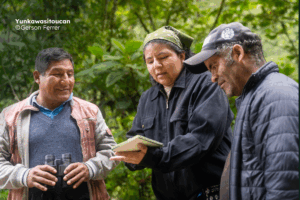
These joint efforts have enabled Calabaza to launch sustainable development initiatives, including establishing a birdwatching association to enhance members’ skills and improve tourism infrastructure. In March, participatory studies documented local bird diversity and identified potential birding routes.
A Biodiversity Sanctuary
Calabaza lies within the proposed San Cristóbal de Pucutá-Menkori Regional Conservation Area (ACR), an initiative by Junín’s Natural Resources Office aiming to:
-Protect 60,000+ hectares of pristine habitat
-Create community-benefitting development models
-Safeguard responsible resource use
Now in Phase II establishment, this future protected area focuses on avian conservation with support from Yunkawasi, Rainforest Trust, Andes Amazon Fund, and Conserva Aves.
Calabaza: Avian Wonderland
More than 100 different bird species have been reported in the Calabaza area alone, including some endemic species that make Calabaza a highly attractive birdwatching destination worldwide. Among the unique species of Peru, the following stand out: Oxapampa Antpitta (Grallaria centralis), Junín Antpitta (Grallaria obscura), Junín Tapaculo (Scytalopus gentryi), Jalca Tapaculo (Scytalopus frankeae).
For more than 10 years, the residents of the Calabaza Village, also located within the Avireri-Vraem Biosphere Reserve, have championed birdwatching tourism as a source of sustainable development.
Currently, they have a lodge under construction, several restaurants serving visitors, and local guides who accompany birdwatchers visiting the area to identify the main species.
The organized community of Calabaza Village faces its next major challenge: participating and excelling in the Global Big Day 2025, the worldwide birdwatching event happening on May 10.
As a partner in the proposed San Cristóbal de Pucutá-Menkori Regional Conservation Area (ACR), Calabaza aims to establish itself as a premier birdwatching destination at both regional and national levels.
“We plan to keep promoting our community using this new bird inventory we’ve created, to attract more tourists and move forward,” stated Carlos De la Cruz, representative of Calabaza Village.