
The initiative presented its results and lessons learned to more than 300 representatives of partner organizations, donors, and allies, and opened a discussion on its potential adaptation to other regions, including Africa.
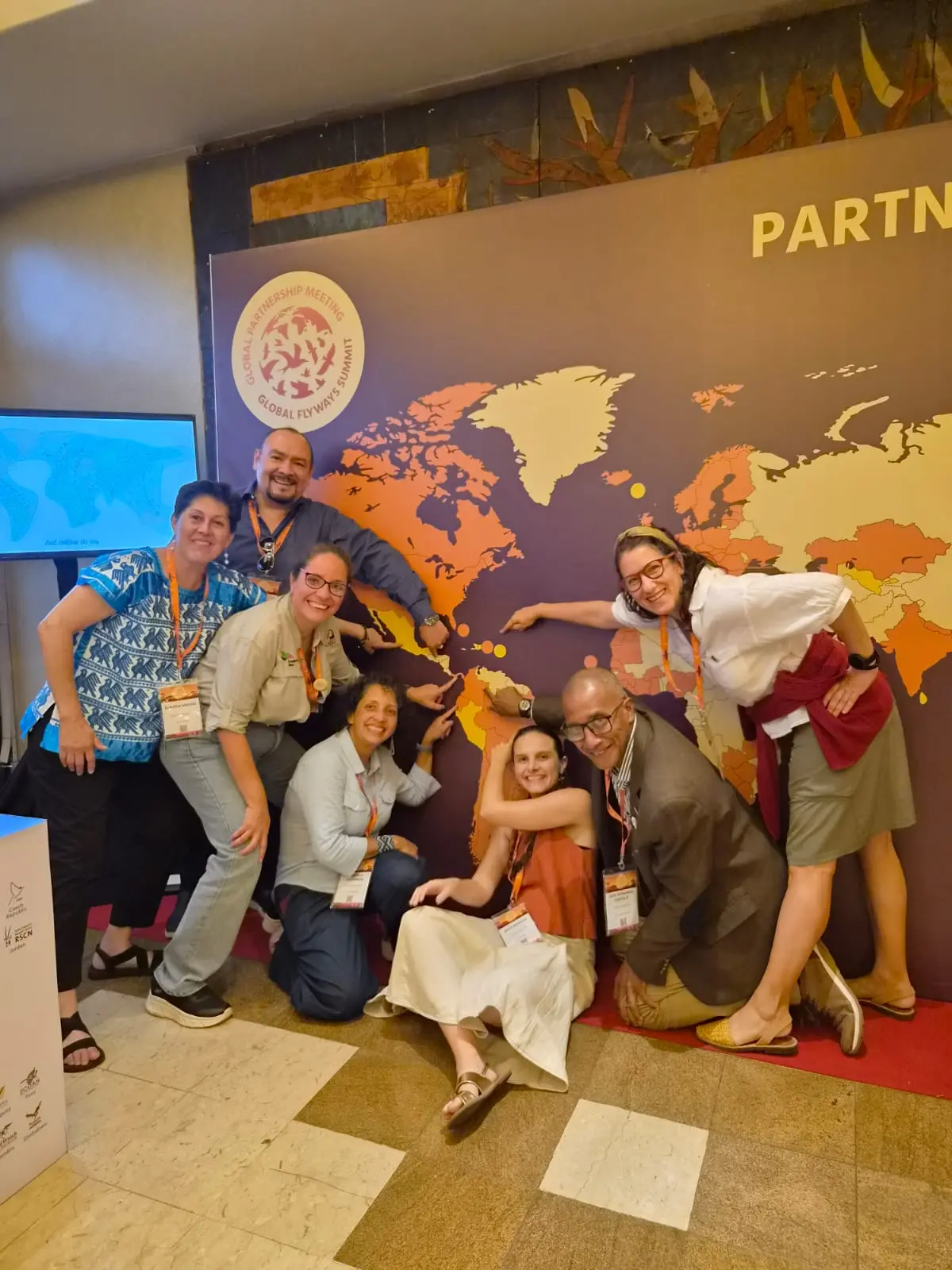
Conserva Aves delegation at the meeting
Conserva Aves brought its experience to BirdLife International’s Global Partnership Meeting, held from September 7 to 12, 2026, in Nairobi, Kenya. The initiative participated in two working sessions focused on sharing lessons learned from its implementation in Latin America and exploring how its principles could be adapted to other regional contexts.
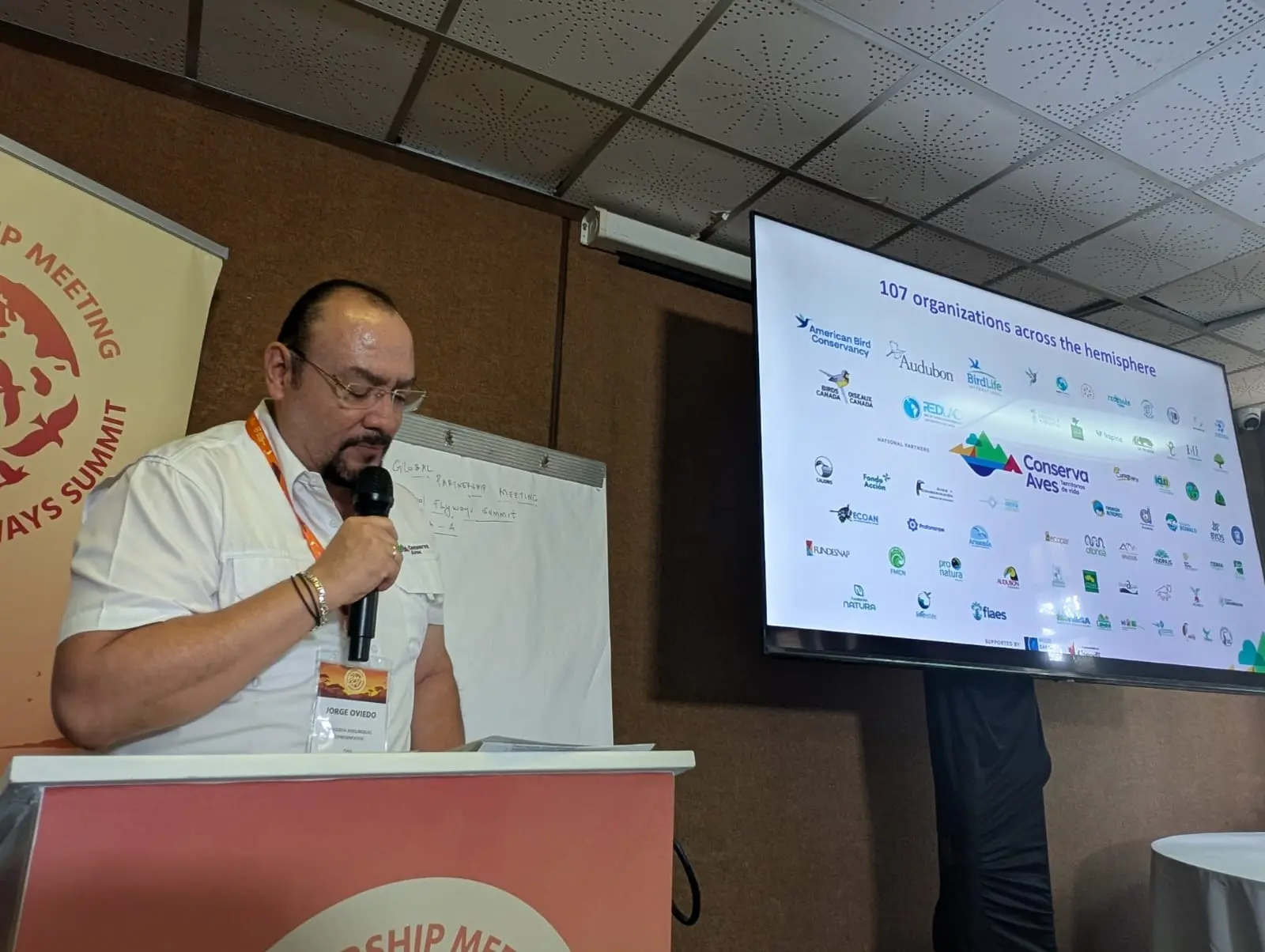
The presentation was delivered by Jorge Oviedo, Executive Director of the Environmental Investment Fund of El Salvador (FIAES), representing the Latin American and Caribbean Network of Environmental Funds (RedLAC), and Aurelio Ramos, Director General for Latin America and the Caribbean at National Audubon Society—two of the five partners leading the initiative at the regional level.
Conserva Aves presented the journey of an initiative launched in 2022 that currently operates in nine countries—Mexico, Honduras, Costa Rica, Panama, Colombia, Ecuador, Bolivia, Peru, and Chile—with the goal of creating at least 100 new subnational protected areas across more than two million hectares.
During the meeting, Conserva Aves presented its locally led conservation model and its capacity to coordinate action at the regional level. The focus was on bringing together local organizations, communities, national environmental funds, and international partners to advance conservation processes from the ground up.
Rather than proposing a single formula to be replicated, the discussion helped identify which elements of the model developed in Latin America could be relevant to other regions, as well as those that necessarily need to be adapted to the institutional, social, and conservation realities of each country.
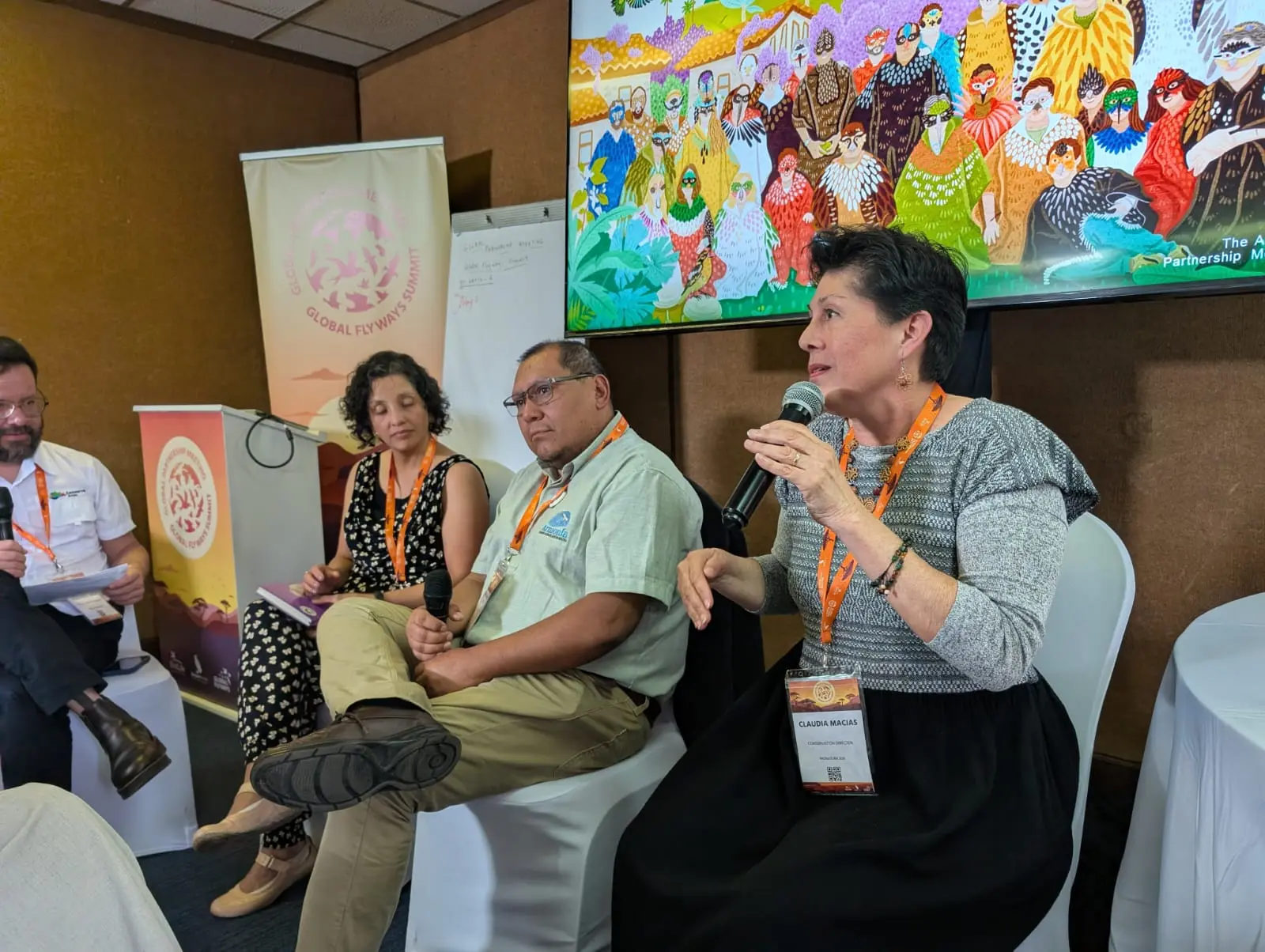
The session brought together representatives from Audubon, BirdLife, RedLAC, and CAFÉ, as well as organizations implementing Conserva Aves across Latin America. Rodrigo Soria, from Armonía; Claudia Macías, from Pronatura Sur; and Gabriela Castañeda, from Aves y Conservación, shared lessons learned from implementing the initiative, collaborating with environmental funds, and working across the different countries and territories where the initiative is being implemented.
“RedLAC’s role within the Conserva Aves consortium has been a catalyst for bringing this experience to new spaces, connecting stakeholders, and exploring new opportunities for funding and collaboration. At FIAES, as a RedLAC member environmental fund and the Network’s delegate representing Conserva Aves, we have had the opportunity to bring this experience into a global conversation.”
Jorge Oviedo, Executive Director of the Environmental Investment Fund of El Salvador (FIAES)
One of the most important outcomes of the meeting was the creation of a dedicated space to explore the potential adaptation of the Conserva Aves experience to the African context.
On September 10, representatives from BirdLife, CAFÉ, RedLAC, and organizations from Latin America and Africa took part in a working session focused on identifying the conditions needed for a potential Conserva Aves initiative in Africa. Discussions addressed national-level opportunities and capacities, potential institutional arrangements, African leadership, resource mobilization, regional partnerships, and risks that should be considered from the earliest stages.
The discussion was grounded in a central premise: any potential African initiative should be designed and led from within the region itself, drawing on those principles from the Latin American experience that are relevant while adapting them to national and local contexts.
As a next step, participants proposed moving forward with a joint working process and exploring the creation of a working group to continue developing this vision.
“One of the most important outcomes of this meeting is that, although Conserva Aves was born in Latin America, in Nairobi a conversation began to take shape around how its principles could be adapted to other contexts and regions. The interest in exploring an initiative led from Africa is a concrete example of how an experience built from the ground up can generate new partnerships and opportunities for conservation.”
Jorge Oviedo, Executive Director of the Environmental Investment Fund of El Salvador (FIAES)
Participation in Nairobi also provided an opportunity to connect the Conserva Aves experience with broader discussions on conservation financing mechanisms. The meeting brought together representatives from conservation organizations, African environmental funds, and potential financial partners, creating spaces to exchange ideas on how regional partnerships can help mobilize resources and complement funding directed directly to organizations and territories.
In this context, discussions also emerged around new financing opportunities linked to the conservation of bird migration routes and the potential role of environmental funds within these types of financing mechanisms.
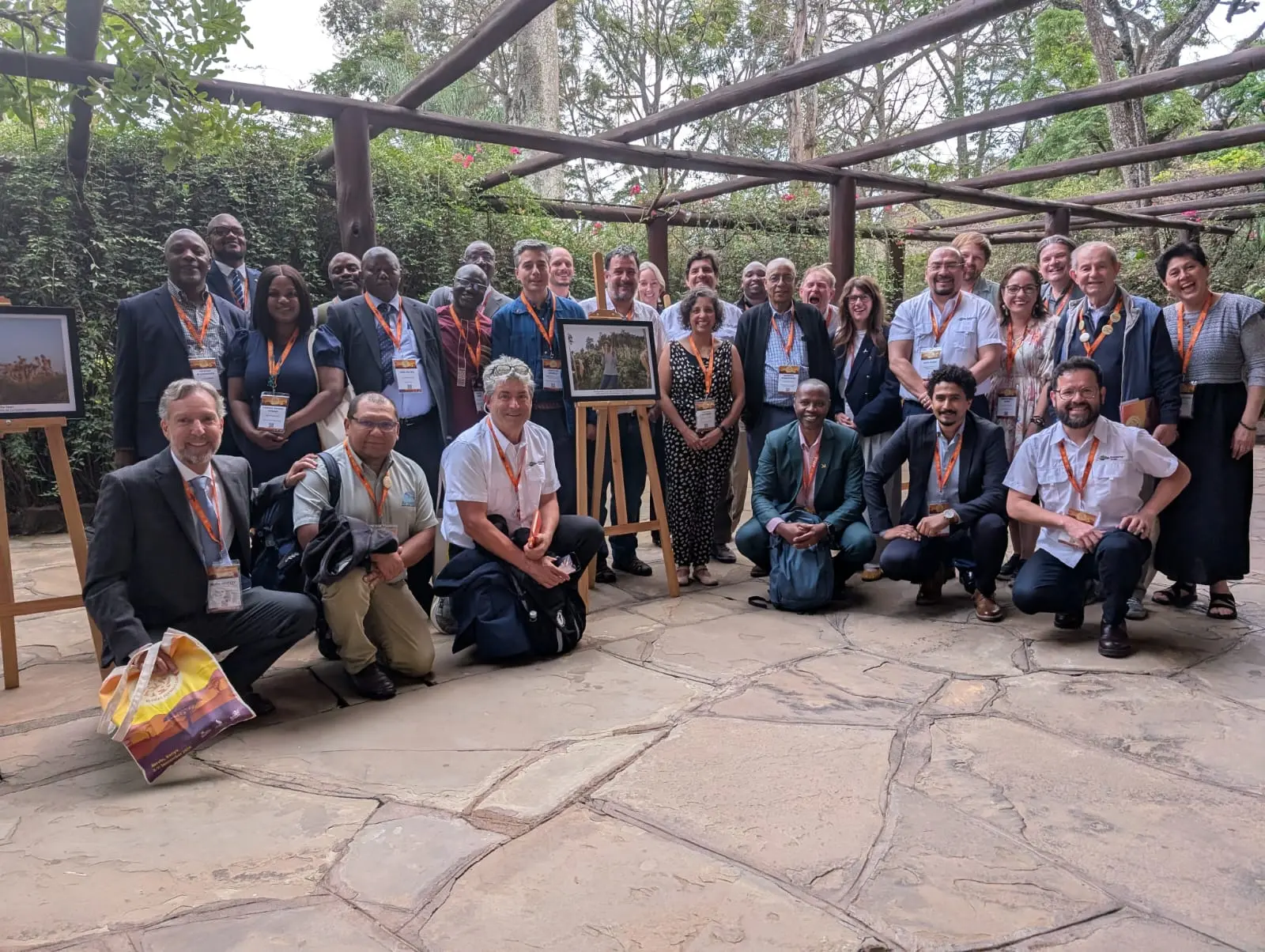
The Global Partnership Meeting, convened by BirdLife every four years, brought together more than 300 representatives from a global network comprising 125 partner organizations in more than 120 countries, along with donors, international environmental funds, and African conservation organizations, with the aim of sharing knowledge, experiences, and best practices among partners.
Conserva Aves’ participation helped put the initiative’s progress into perspective while also opening a conversation about how a Latin American experience of locally led conservation can contribute to knowledge exchange and the development of new partnerships across regions.
Conserva Aves is a regional initiative led by American Bird Conservancy, National Audubon Society, BirdLife International, Birds Canada, and the Latin American and Caribbean Network of Environmental Funds (RedLAC).
The initiative promotes the creation and sustainable management of subnational protected areas across Latin America and the Caribbean to contribute to the conservation of threatened, endemic, and migratory birds and their habitats.