Call for Proposals and Funding through the Equity Fund

The new Bajo Putumayo Yaguas Communal Reserve, spanning 160,000 hectares in Loreto, will strengthen biodiversity conservation and co-management with 13 Indigenous communities. Its establishment was driven by SERNANP, ANECAP, and Conserva Aves, which provided technical and financial support to advance a participatory and sustainable model for Amazonian conservation.
ANECAP
The National Association of Administrators of Communal Reserve Management Contracts of Peru (ANECAP) announced the recent creation of the Bajo Putumayo Yaguas Communal Reserve, which covers a total of 160,604.41 hectares and is located in the district of Yaguas, Putumayo province, in the Loreto region.
Its conservation will help protect emblematic species such as the abiurana, paiche, giant electric eel, giant river otter, Amazon river dolphin, and jaguar, while also strengthening co-management with the Indigenous communities living in the area, ensuring the protection of their ancestral territories and promoting their sustainable development.
The incorporation of ANECAP as a local partner and strategic ally of Conserva Aves strengthened the final phase of the area’s establishment process, while the creation of the reserve was driven primarily by the technical teams of SERNANP, ANECAP, and other allied organizations that promoted its official designation. Thanks to the technical and financial support of Conserva Aves, effective collaboration in political and social advocacy in the territory was possible. Specifically, strategic meetings were supported with several communities of Bajo Putumayo, and Indigenous leaders were enabled to participate in high-level dialogue spaces with the Ministry of the Environment, which accelerated this key establishment process.
Conserva Aves joins this collaborative effort, working alongside the key actors that promote conservation and participatory management in the area. These include:
-The Organization of Indigenous Communities of Bajo Putumayo and Río Yaguas (OCIBPRY)
-The Regional Organization of Indigenous Peoples of the East (ORPIO)
-The Interethnic Association for the Development of the Peruvian Rainforest (AIDESEP)
-The National Association of Administrators of Communal Reserve Management Contracts of Peru (ANECAP)
-The neighboring Indigenous communities, Yaguas National Park
-The National Service of Natural Protected Areas (SERNANP)
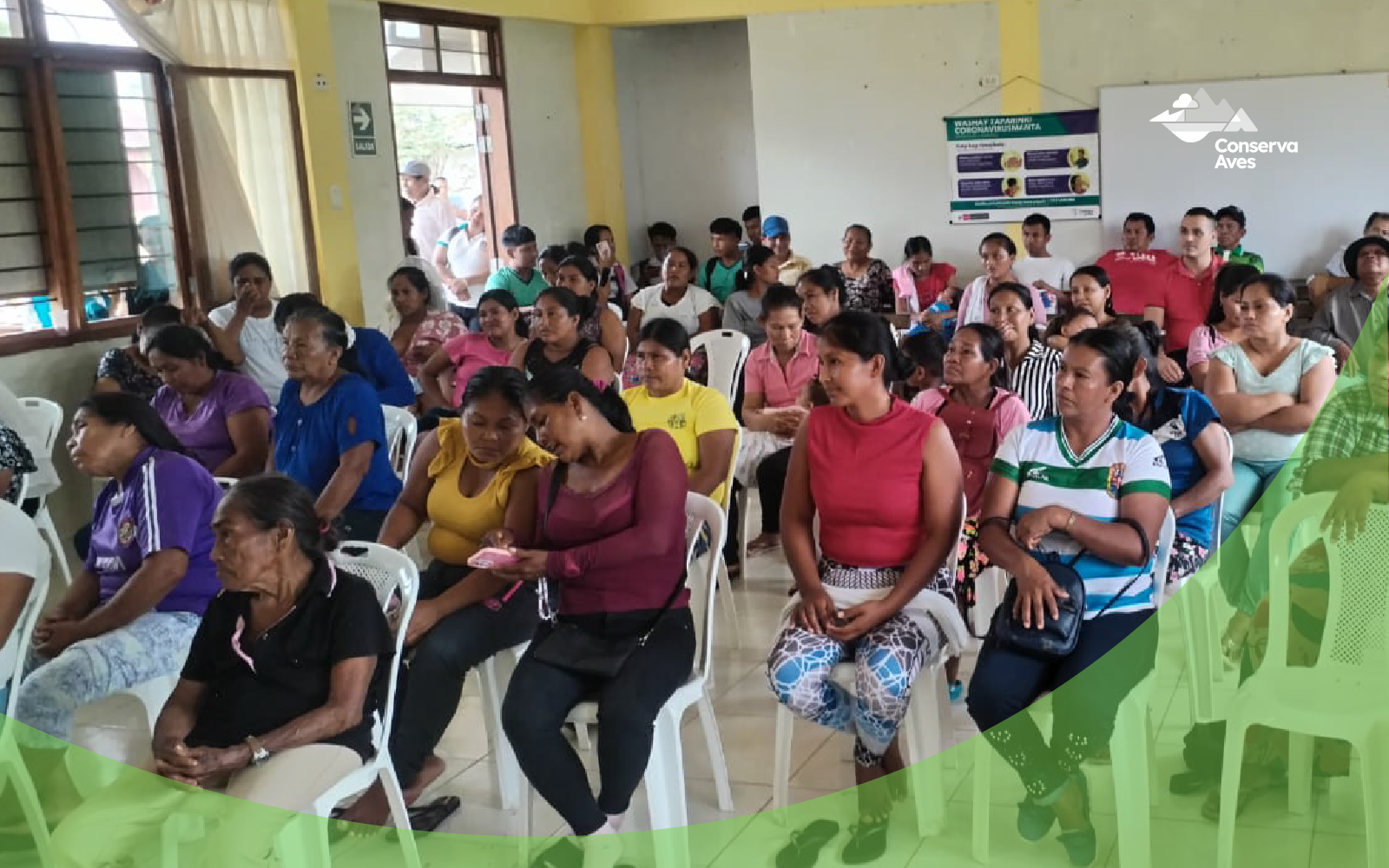
ANECAP participated in the call launched by Profonanpe under the Equity Fund, the financial mechanism of Conserva Aves designed to facilitate direct access to multi-year resources for women, Indigenous communities, Afro-descendant peoples, and other historically excluded groups, enabling them to implement conservation actions in priority areas for birds.
Through this fund, the establishment of a new Communal Reserve in Peru was supported, strengthening the leadership of communities and the role of ANECAP as the representative organization for the co-management of communal reserves.
A Key Step for Conservation and Shared Management
The National Service of Natural Protected Areas (SERNANP) of Peru, as the governing body of the National System of State-Protected Natural Areas (SINANPE), promoted the establishment of this Communal Reserve as part of fulfilling the agreements resulting from the prior consultation process for the categorization of the Yaguas Reserved Zone (2017).
Participation of Indigenous Peoples and a Gender Focus
The Reserve encompasses 13 Indigenous communities belonging to six Indigenous peoples: Bora, Murui-Muinani, Kichwa, Ocaina, Ticuna, and Yagua.
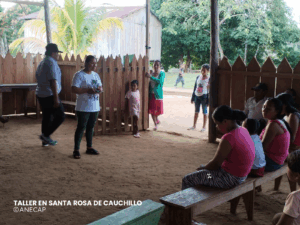
In this context, ANECAP is leading an initiative aimed at strengthening the participation and engagement of Indigenous leaders and women leaders from the communities of Santa Rosa de Cauchillo, Huapapa, and Primavera in the co-management process of the Bajo Putumayo Communal Reserve, laying the foundation for their active role in defining the main management instruments of the protected area:
-The Master Plan
-The technical proposal for the administration contract
-The financial sustainability strategy
The project promotes the participation of women and their organizations through training and support actions during these initial processes—considered the first steps toward co-management by articulating the State, through SERNANP, with Indigenous communities via their ECA (Executor of the Administration Contract)—ensuring effective participation both in Bajo Putumayo and in the Napo-Putumayo Biological Corridor, which also integrates the Huimeki and Airo Pai Communal Reserves.
The actions of Conserva Aves build on the valuable conservation efforts carried out in the area over many years. This initiative, in strategic alliance with ANECAP, complements ongoing work supported through the “Amazonian Living Landscapes” project (funded by IKI). The crucial value of Conserva Aves lies in its focus on the post-establishment phase: financing key actions to build strong and sustainable governance, with a priority emphasis on women’s participation.
The Path Ahead for the New Communal Reserve
Following the official creation of the Bajo Putumayo Communal Reserve, Profonanpe and ECOAN will continue supporting ANECAP in developing the Master Plan, defining financial sustainability strategies, and strengthening the gender approach within the co-management model.
This achievement reflects the importance of joint work among ANECAP, local communities, and strategic allies—including Conserva Aves—to consolidate collaborative, inclusive, and sustainable conservation models that strengthen collective rights and Amazonian biodiversity.
With this new Communal Reserve, the communities of Bajo Putumayo become guardians of a living territory where birds, rivers, and Amazonian cultures continue to connect the hemisphere through conservation.
About the Conserva Aves Initiative
Conserva Aves is an alliance among American Bird Conservancy (ABC), National Audubon Society, BirdLife International, Birds Canada, and the Latin American and Caribbean Network of Environmental Funds (RedLAC). In Peru, it is implemented by Profonanpe together with the Andean Ecosystems Association (ECOAN). It also receives financial support from the Government of Canada through Global Affairs Canada (GAC).